What happens when Danish design meets total flexibility?
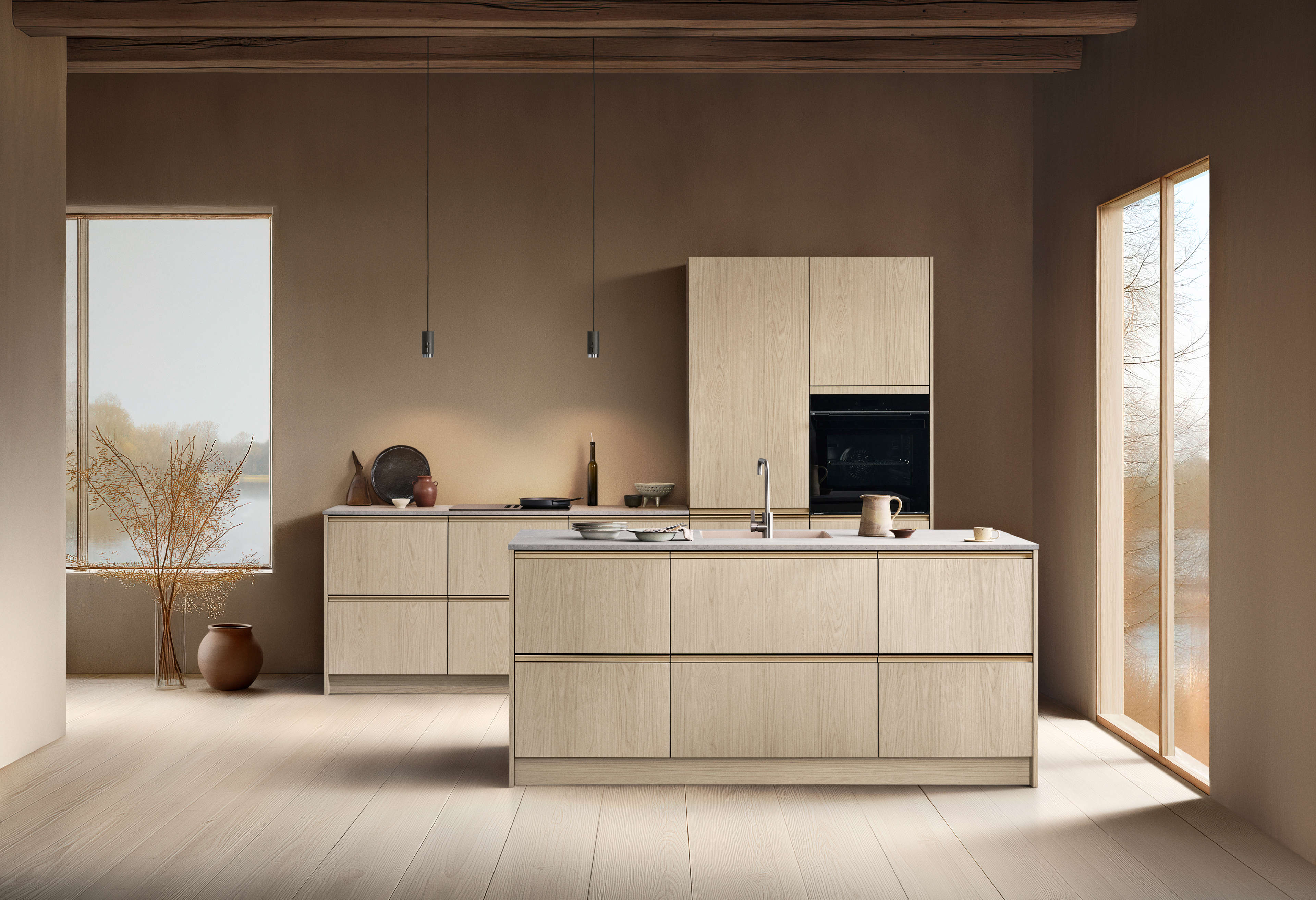
In this episode of The Sociable Kitchen® Podcast, host Julie Broberg talks with Helle Bjerre Drost, Senior Concept Manager at Kvik and the creative lead behind Compose — the brand-new kitchen that brings together timeless Danish design, real-life functionality, and an unprecedented level of personal choice.
Helle shares how Compose was developed from the inside out: starting with an ergonomic integrated handle, exploring new materials and colours, and creating a huge 64 possible combinations so customers can compose a kitchen that feels uniquely theirs. She explains how her background in furniture and innovation shaped the process, why simplicity is essential for keeping prices surprisingly low, and how today’s customers are seeking long-lasting, meaningful design anchored in everyday life.
From colour trends and wood tones to the importance of longevity and hygge, this episode is a deep dive into what makes Compose both practical and poetic — a kitchen designed to evolve with you.
Compose is available now. Create your own perfect harmony at kvik.com.
This page is a transcript of the episode.
Danish design — COMPOSE
Welcome to the Sociable Kitchen, a podcast by Kvik. I'm Julie Broberg. Today, we're here to talk about our brand-new kitchen. It's called Compose.
We sat down with Helle Bjerre Drost, our Senior Concept Manager, who is responsible for Compose. She started at Kvik last autumn and hit the ground running, ensuring that Compose came to life and could even be released a little bit earlier than planned, despite coming in a whopping eight different colours for one of the largest ranges we've ever produced.
But let's get right into our conversation with Helle. I started off asking her about her background.
When you do a design for the kitchen, it's a long process
Helle: I worked in different positions in the furniture industry and interior industry early on before I came to the kitchen industry. So I'm not an educated designer, but I worked a lot with innovation in a lot of different forms, and my interest has always been in design and interior, and I did a lot of my own projects when I was younger. I did a lot of creative stuff.
I also lived a couple of years in Italy, in Milan, and which is the fashion capital in the world, in my opinion, where design is a very big part of the city. So my interest has always been in the design industry. How can I put design into a market that actually leads to a product that is available? That people want and then they can buy, and they can find, and they can use. And it appeals to them.. So I think that's my background for sitting here.
And when you are sitting in the kitchen industry, it's not like in the textile industry where you design a new T-shirt every day. When you do a design for the kitchen, it's a long process, and you need to be quite wide in your appeal. So a lot of my work is not only finding trends and seeing what's going on in the market and talking to our stores and our customers, but it's also leading the processes internally in our house.
A big part of my job is project management, trying to make sure that everybody is on the right track during the process. And there are so many moving parts. Design is one part of this, and it's where we start. That's of course the fun process where you brainstorm, and you see what's going on, and you gather a lot of ideas, and then you work much more and more into a practical part of the process where you make prototypes, you make tests, you talk to the possible suppliers to see what's possible and what's not possible.
And then you look at new material possibilities. Because there’s new recycled materials and we have a lot of focus on that. And then you get the last part of the development process of the kitchen where you talk with the salespeople, you talk with the marketing, you talk with the communication people and say, "Okay, the ideas we originally had in the beginning, how is it that we can bring them to the market? How can we tell the story about this product?"
So the job I have is quite wide in our group. You talk to people all over Kvik.
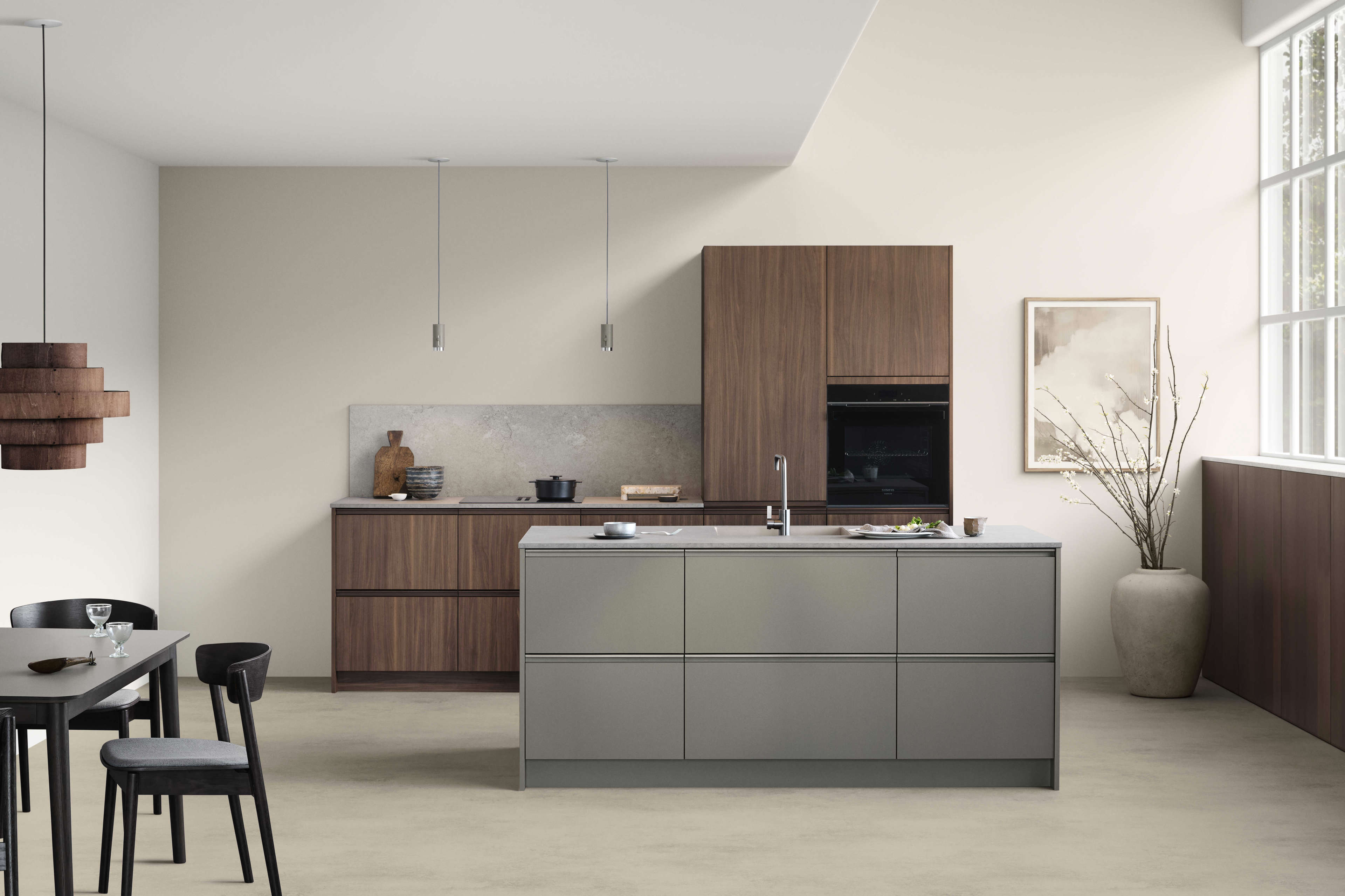
Innovation is probably a good word when you talk about design
Julie: So it's a big job ensuring that any new kitchen we add to our carefully curated selection is right for us and our customers. Helle's job is part designer, part trend forecaster, and part project manager but what she finds most interesting is working with innovation — innovation in materials, production methods, as well as the design.
Helle: I think my personal interest in design and interior and in general, following the trends and in seeing what is going on, I have worked a lot with consumer trends, with, in general, a lot of different things within design. So I think the position I'm in now, it's a mix of design, but it is also an approach to innovation.
Innovation is probably a good word when you talk about design. So it's also to see what we do really great within Kvik and then try to contribute to take it to the next level, to the next step in our process. Also because the market is changing all the time, so we need to be very much aware of what's going on around us to see what's what is moving in the world, what's going on, where are the consumers going, where, how's the financial purchasing power in the market?
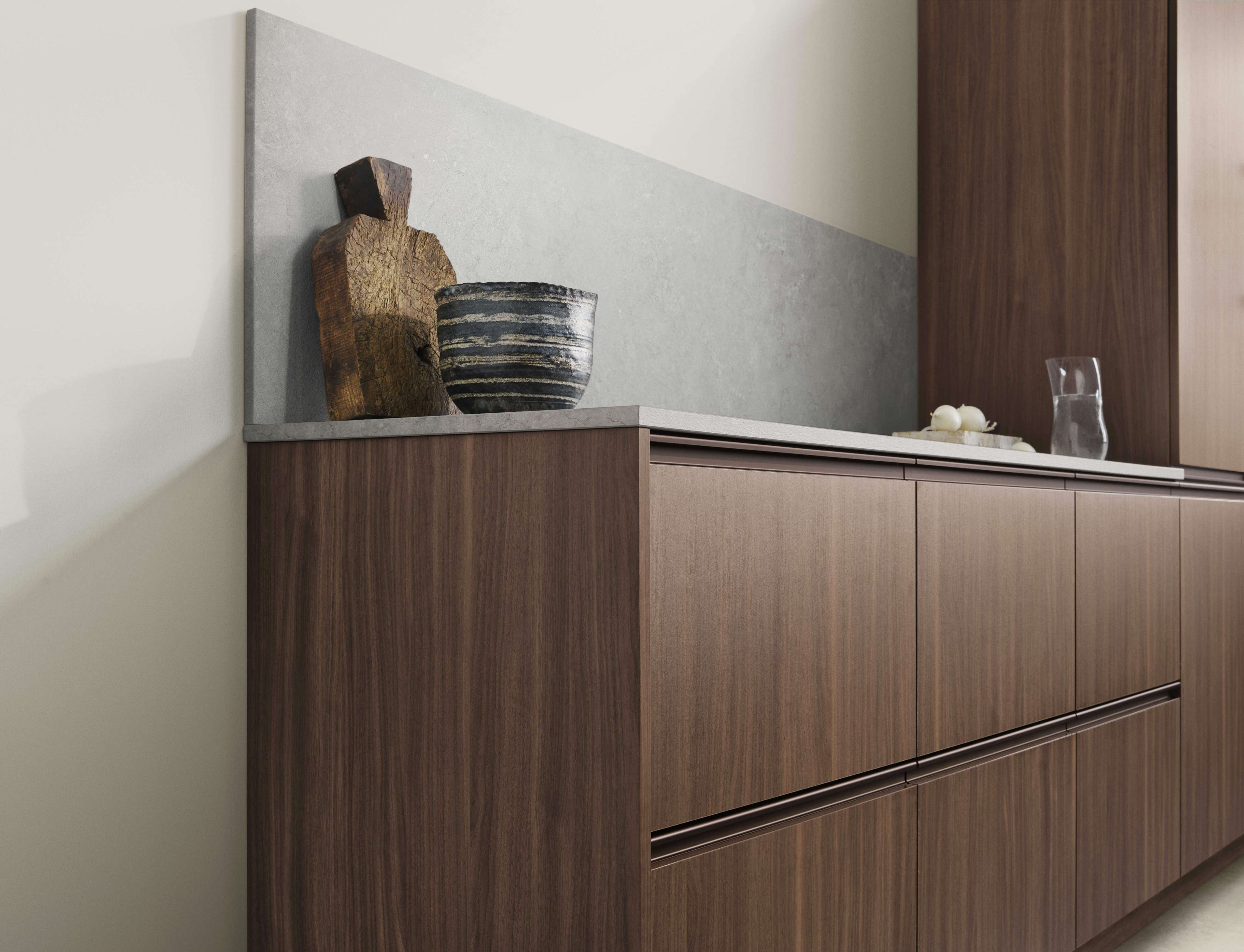
When you purchase a kitchen, you spend a lot of time
Julie: So it's a lot of things when you work with design. It's a huge spectrum. It's hard to even imagine. It isn't just how something looks. What did you think when you came into Kvik and then you thought, and then how did you begin to take those innovation steps?
Helle: I have known Kvik for years as a consumer, and I follow Kvik for many years. I even have purchased Kvik items before I started here. So I think for me, Kvik is a company where you can get a really nice design, but at a price point where we can all join. So my approach to this was, I come from the furniture industry, and when you work in the furniture industry, you are quite envious on the time spent in the stores, in a kitchen store.
Because if you buy furniture or clothes or anything else, the consumers are there very short. But when you purchase a kitchen, it's really a purchase where you want to spend a lot of time on this. It's not just a quick decision. So I think the very interesting part about being in the kitchen industry is working with long-lasting consumer goods and not just, yeah, something that you dispose after a relatively short time.
So that has been a very nice thing for me to work with. Also in the world we are today, where we talk a lot about sustainability and we can't just purchase new things all the time. When we purchase something, we need to consider carefully our purchases, so we don't- Yeah. So we, we have the things longer …we keep them. We buy something. We carefully consider that purchase and then we keep it for a long time. And that's something I really like with the kitchen industry is it's not just a quick decision and then you do this. It's something you, that you care about. It's a central part of your house. So I think the product for me is the main, uh, love in this industry.
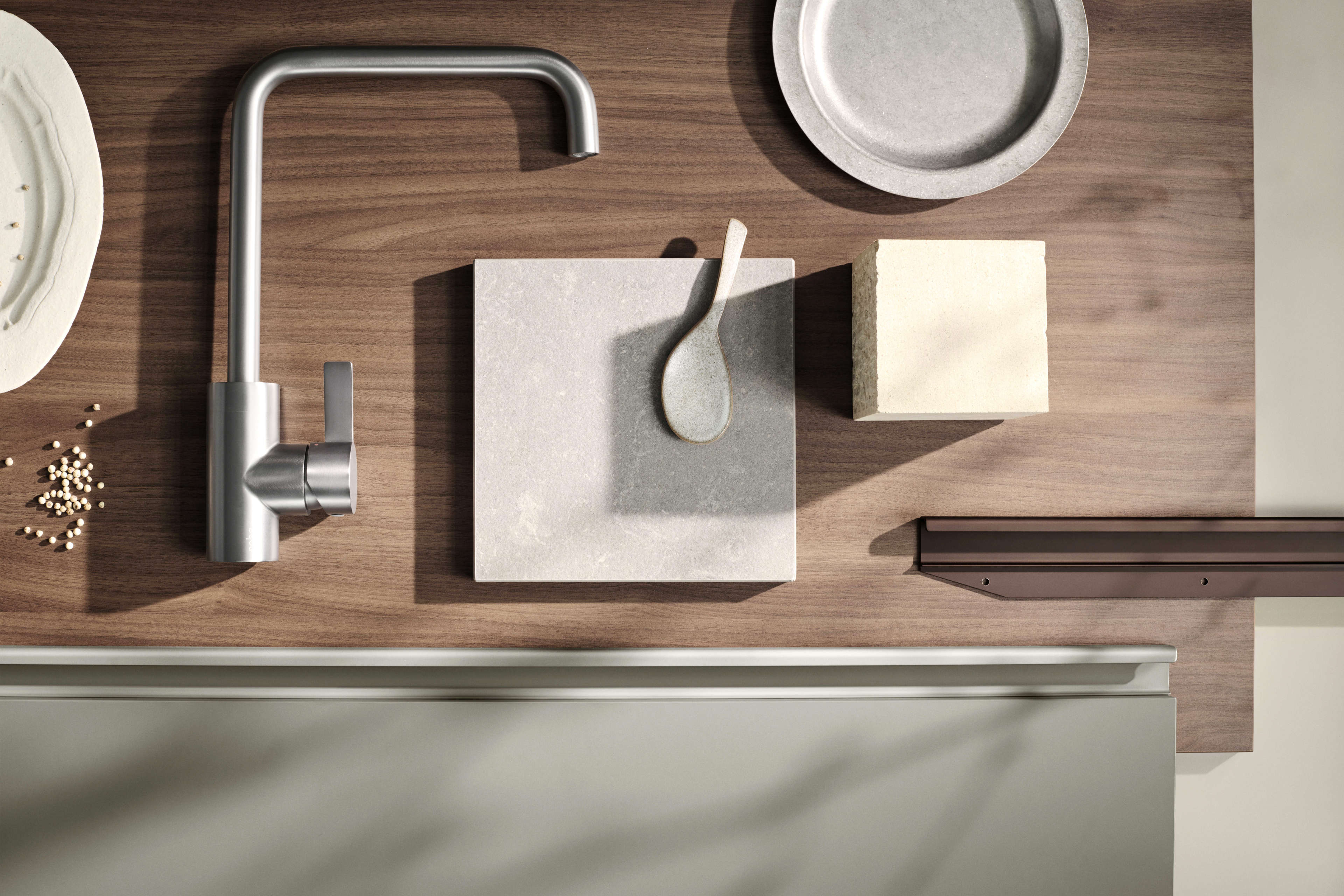
Julie: The kitchen is the heart of the house. Do you think that Danish design actually affords something unique in that? Danish designs are always timeless, right? They have clean lines. They're quite minimalistic. They don't have... They're not big, flashy. You're not gonna see a kitchen in bright red or whatever, and it's not gonna have, you know, something shiny. Do you think that those things go hand in hand, Danish design and that sort of long-lasting..? Is it sort of easy in a way?
Helle; Absolutely. I think our heritage come from the classic designers from the '50s and '60s, and they really understood to take craftmanship into long-lasting furniture, and I think that is something that we still keep in our bones today when we develop these kind of things because Danish design is, for me, a minimalistic design, but it's also innovative. But it's still things that take the functionality and the practical part in the design to a very high level. I think the very unique thing about Danish design is we can design something which is timeless but follow the trends, but it's also a functional piece for your home.
Julie: It's not just something flashy you want to put on Instagram and say, "I bought this. This is really nice." It's really something that you can use for years. Now let's get into how all of this ends up in an actual new kitchen design. One of Helle's first projects for Kvik is Compose, our newest kitchen that debuted June 1st. We always talk about having surprisingly low prices in Kvik, and Compose truly embodies this. It's a lot of great high-quality Danish design at a price point that's very accessible for everyone. I had to ask Helle how she managed to achieve this.
Helle: I didn't achieve anything alone. No. I joined a very good team, and what was very essential for us was to look into what the market needs at the moment. We manufacture to the warehouse, so we can actually deliver everything tomorrow if you want. That is the difference to other offerings in the market. So when we do something, we also need to really have a good stomach feeling saying, "This is, uh, something we really believe in." Yeah, 'cause we're gonna put a big supply of it in our warehouse. So we wanna know for sure that it is something people want. It's a big investment when you're stocking the items. So of course it's very important that you do your homework really well. So we looked into the market to see where can we see a gap, where can we fill something in that where we are not today and where we don't think the competitors also have a great offer.
So first of all, we have to make a kitchen which is not very complex. It's in a price point where it's accessible for a lot of consumers. So we can't just take the most difficult parts into the production and innovate a lot of new things,
Compose started with the handle
Julie: You needed to keep it simple.
Helle: Yeah, we need to keep it simple. First of all, it's when you look into a kitchen, the, the main point is how do you open my kitchen fronts? So that is probably the first approach to this, is to see, okay, do we need to make a kitchen with a handle? Do we want to make it handle-free or integrated handle? And- That was where we actually started to say, "Okay, our research showed that we should make a kitchen with an integrated handle," because that's where we think we can do something special in the market.
So that was our starting point, to see, okay. So we went to a good partner and said, "Please, we are thinking this and this. Can you please design something that fits our needs to this?" And then we joined a good cooperation with them, and they came up with a handle that we could use for this concept, and then we developed the front from there to fit into this.
Julie: Okay, so you started with the handle.
Helle: Yeah, we did. Okay. Yeah, yeah, yeah. So of course, and the handle is so important in the kitchen because we wanted to make a kitchen that is functional. And, uh, then the ergonomics of the handle is so important. So you want to open your kitchen fronts easily. Even the kids could open the freezer and the dishwasher. So the ergonomics of the handle has been very important for us.
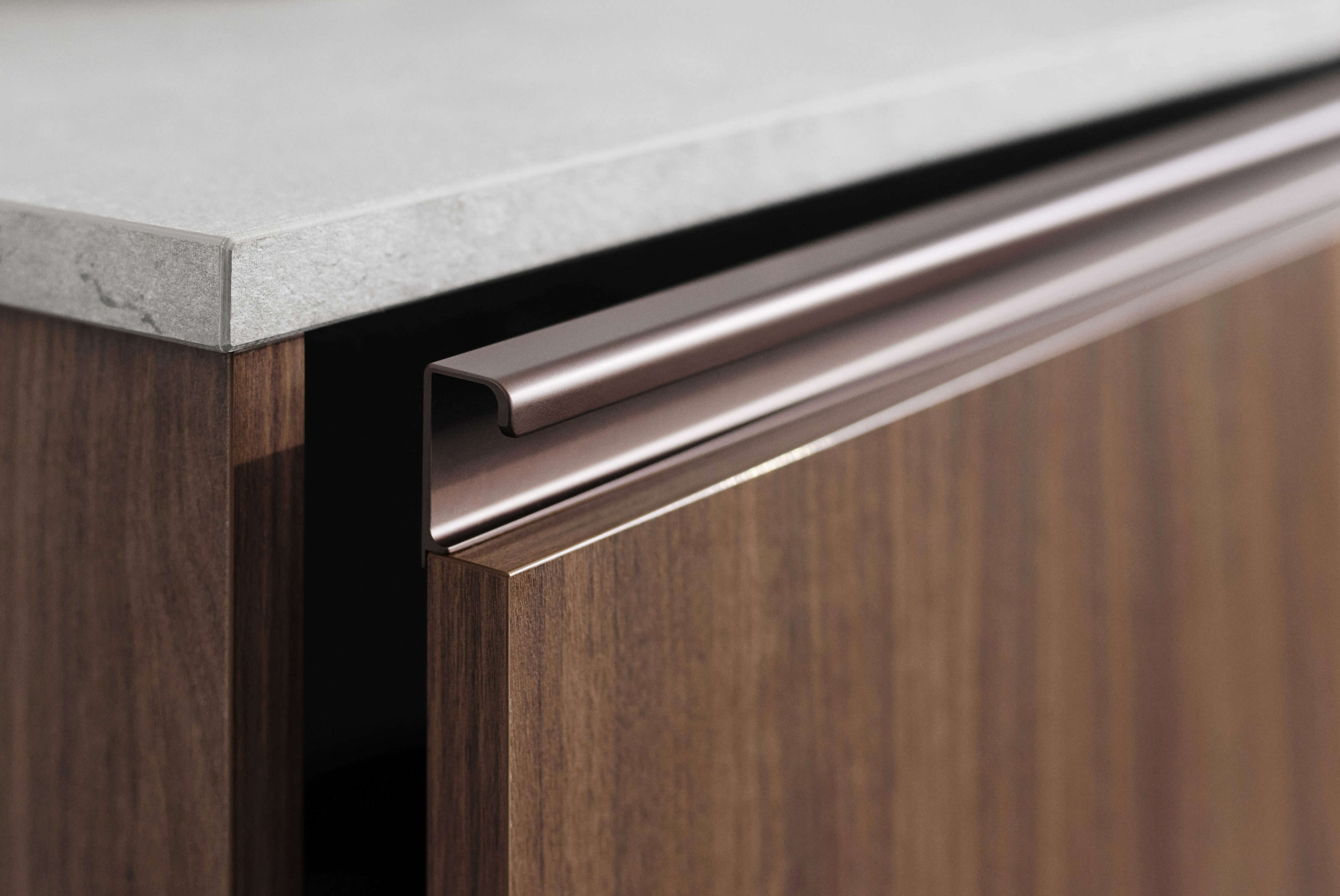
Which colours do we want to introduce in this kitchen range?
Helle: Then when you can say the construction was finalised, we looked into, okay, how do we do colour-wise? Because we also wanted to bring something into the market with a high degree of flexibility in regards to the colours and also to the cabinet range because we are selling, not only in Scandinavia, we are also selling in other countries in Europe and in Asia.
We need to have a relatively big cabinet range because we sell to start homes, to small apartments, but also to big houses, and it requires a big range where you can fit your kitchen into your available space. That was the next thing we did. Okay. Say, okay, which kind of colours do we want to introduce in this kitchen range and the cabinet range? And then we build the whole range from there.
Julie: Okay, so you started with the design of the handle, but you didn't know at that point what colours you would want. I think, uh, this kitchen also is actually the most colours Kvik has ever come with at one time. We're known, I think, for having a pretty limited range of colours, for giving people, like, beautiful designs in a few colours and not overwhelming people with choice. But this time we actually we're offering eight colours. And then eight colours of handle as well. So it's much bigger.
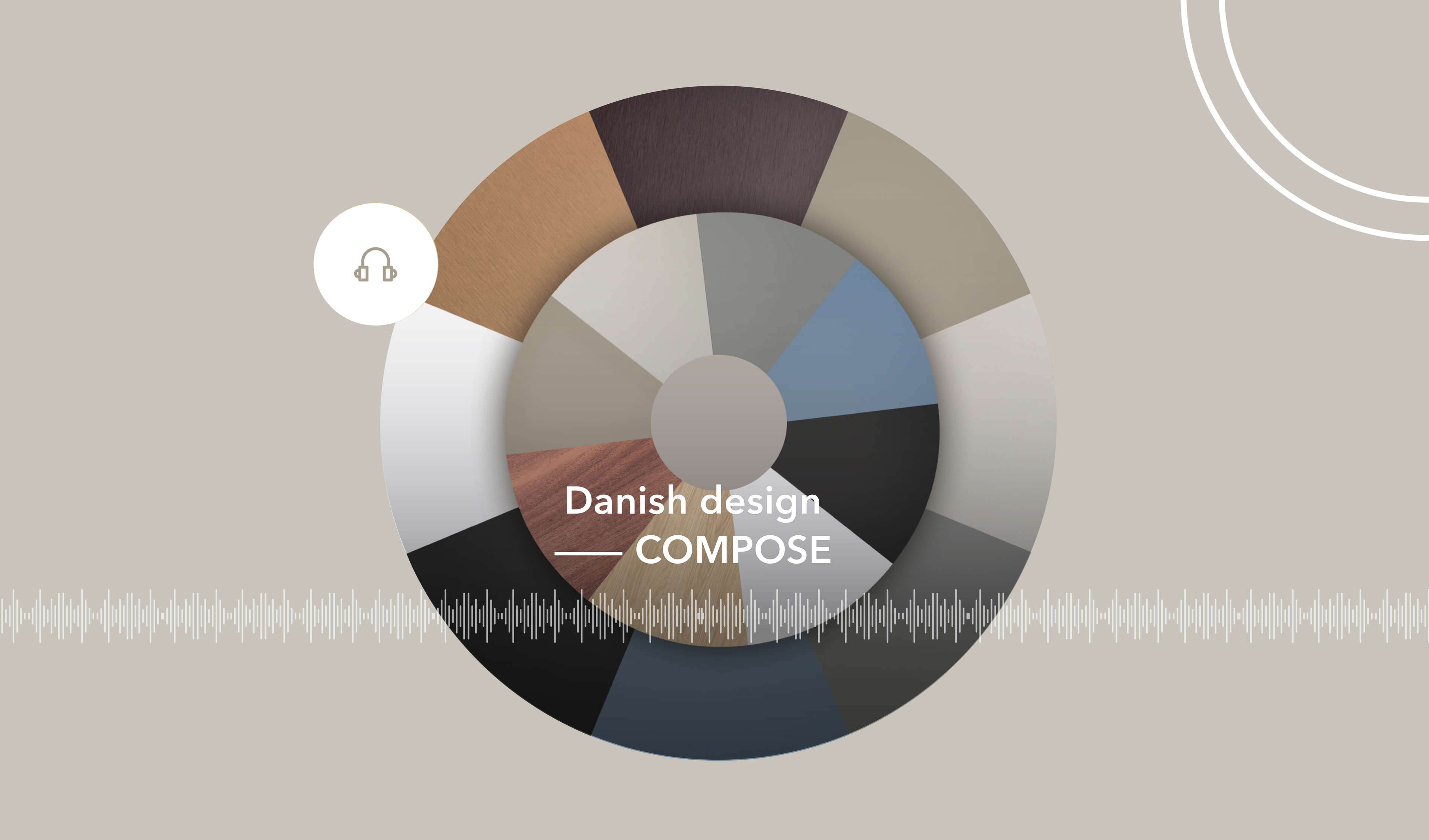
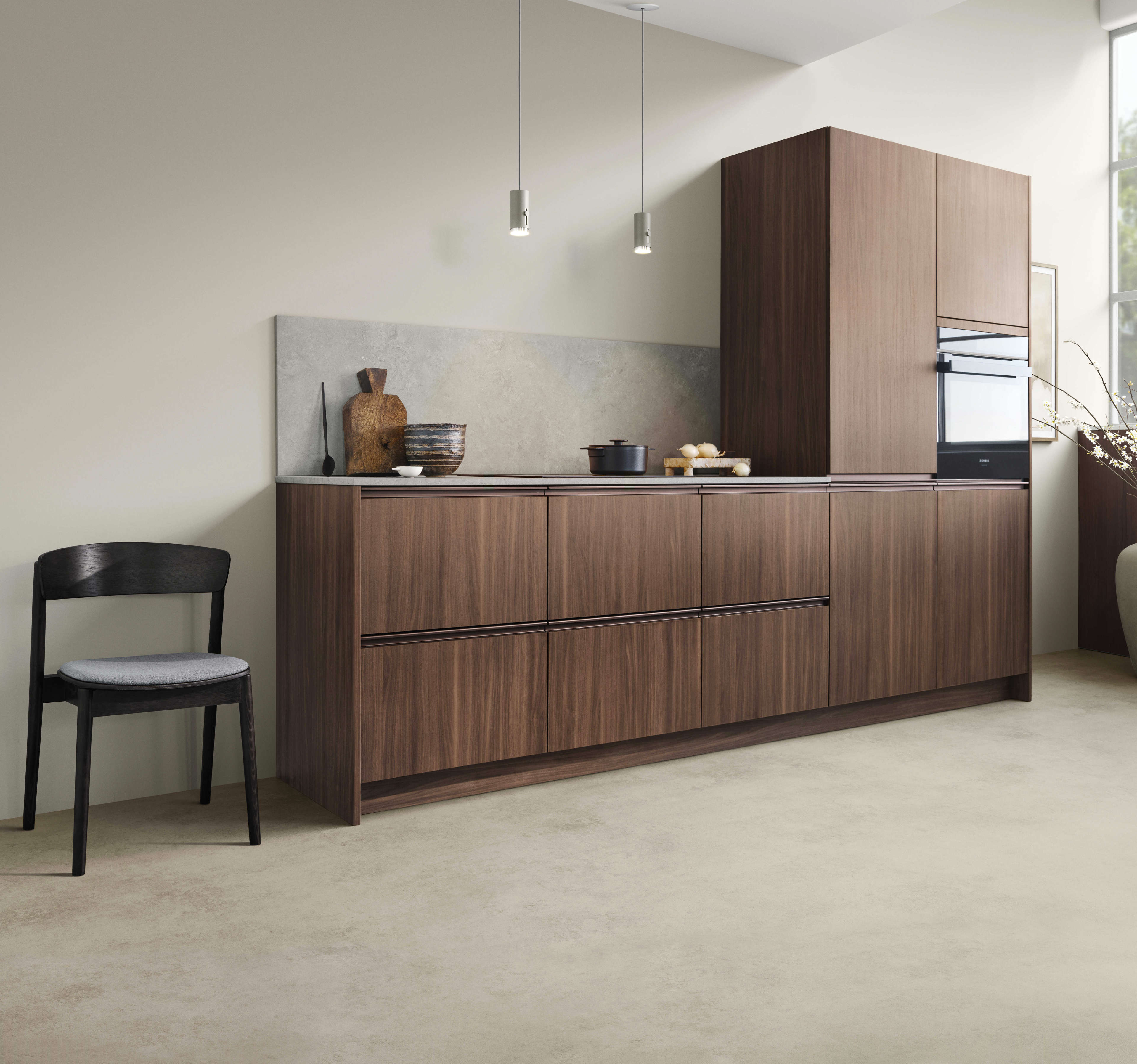
Helle: It is a very big range, and as you say, we introduce eight colours of the fronts, but six of them are known in our range today. We know they work, we know they work well in different styles. And then we introduce two new colours in the range that we haven't had before, and that's where we look a lot into the trends in our market. We go to different exhibitions, we go to trend seminars, we listen to customers. We seek the inspiration in the market, and we see a lot of trends within wooden colours.
We settled on two wood colours — nordic light and nordic glow
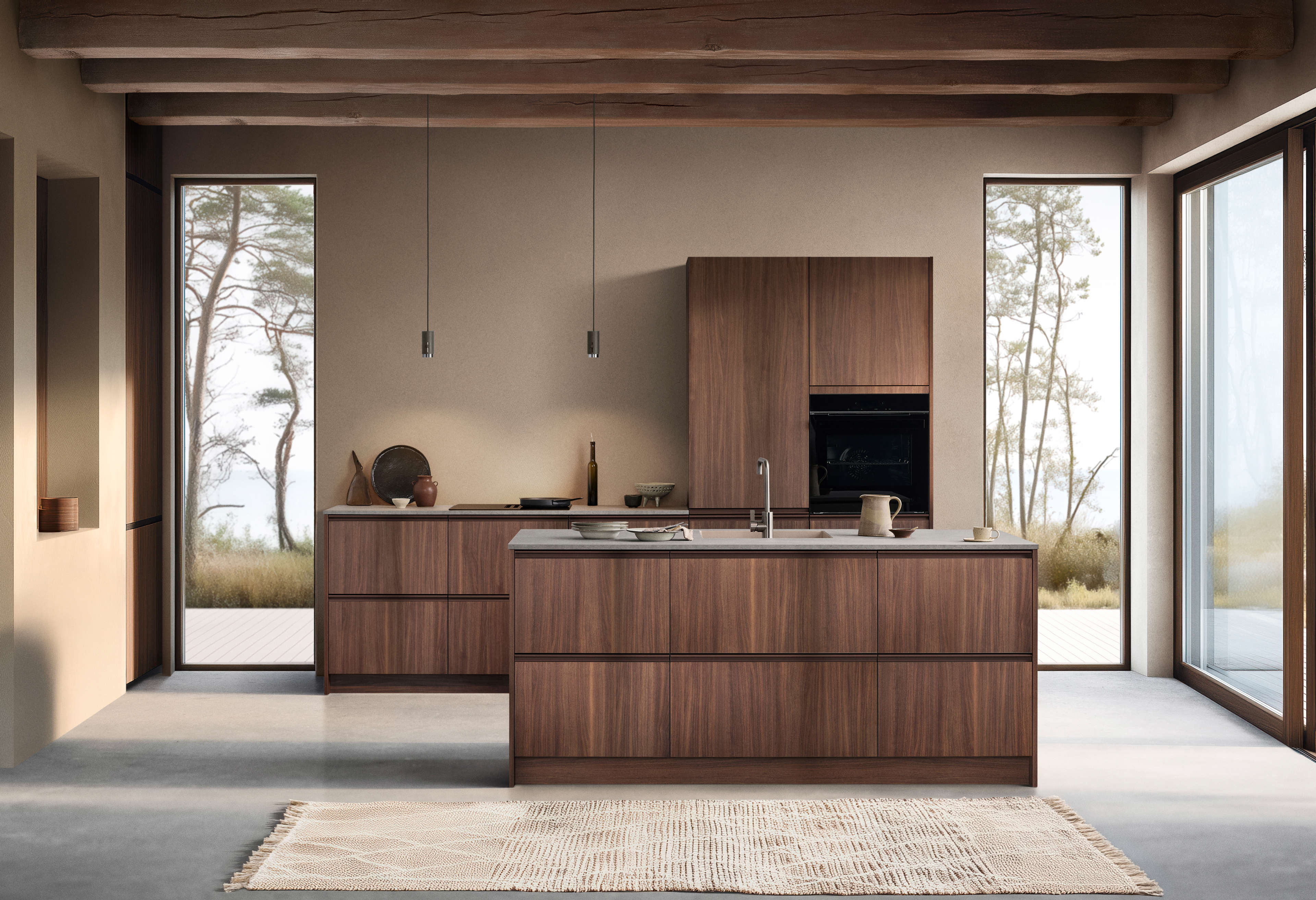
Helle: But it's not as easy as it was years back where the colour range for wood was more limited because today we see a big span in the range of the wooden colours. So we have introduced what we call nordic light. It's a light wooden colour, and then a walnut color into the range.
And that is actually also one of the trends we see that you combine your kitchen not only in uni-colour. You don't always just choose one colour, like a gray for the whole kitchen. No, you select maybe a gray for the tall cabinets, and then you might have island that you want to put a wooden colour on. I believe that's something we'll see even more in the future, that you combine different colours in the kitchen more than you did previously.
And exactly with the two wooden colours we're introducing in Compose, they really give this match of nice uni-colour and a wood. They're a great complement to any of the other colors. So they give people a lot of choices.
Julie: Yes. I know we've looked a lot at the how many combinations it is, and with eight different handles and eight different colours, it's 64 possible combinations. So the chances are that your kitchen will be exactly like your neighbour's are pretty low.
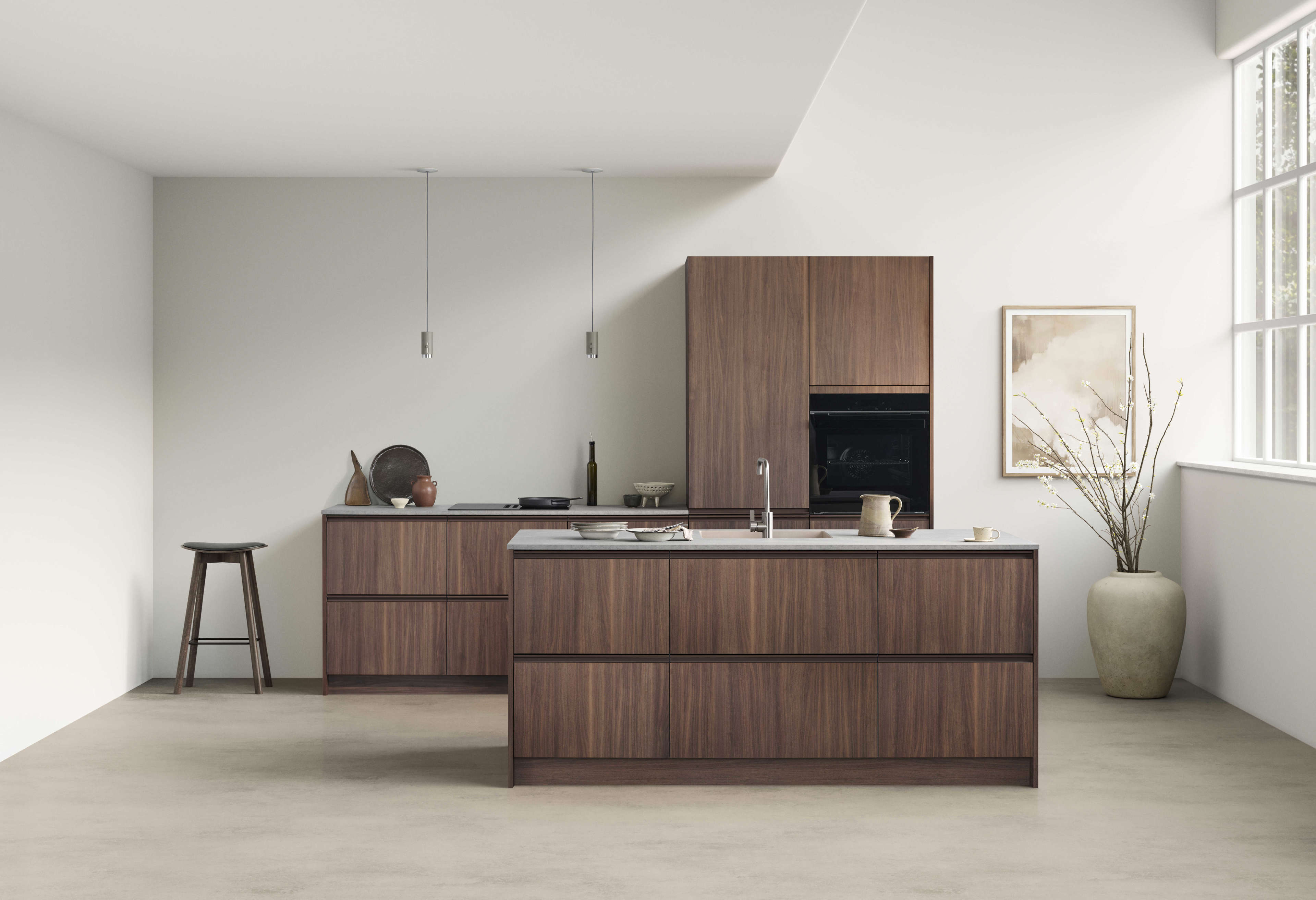
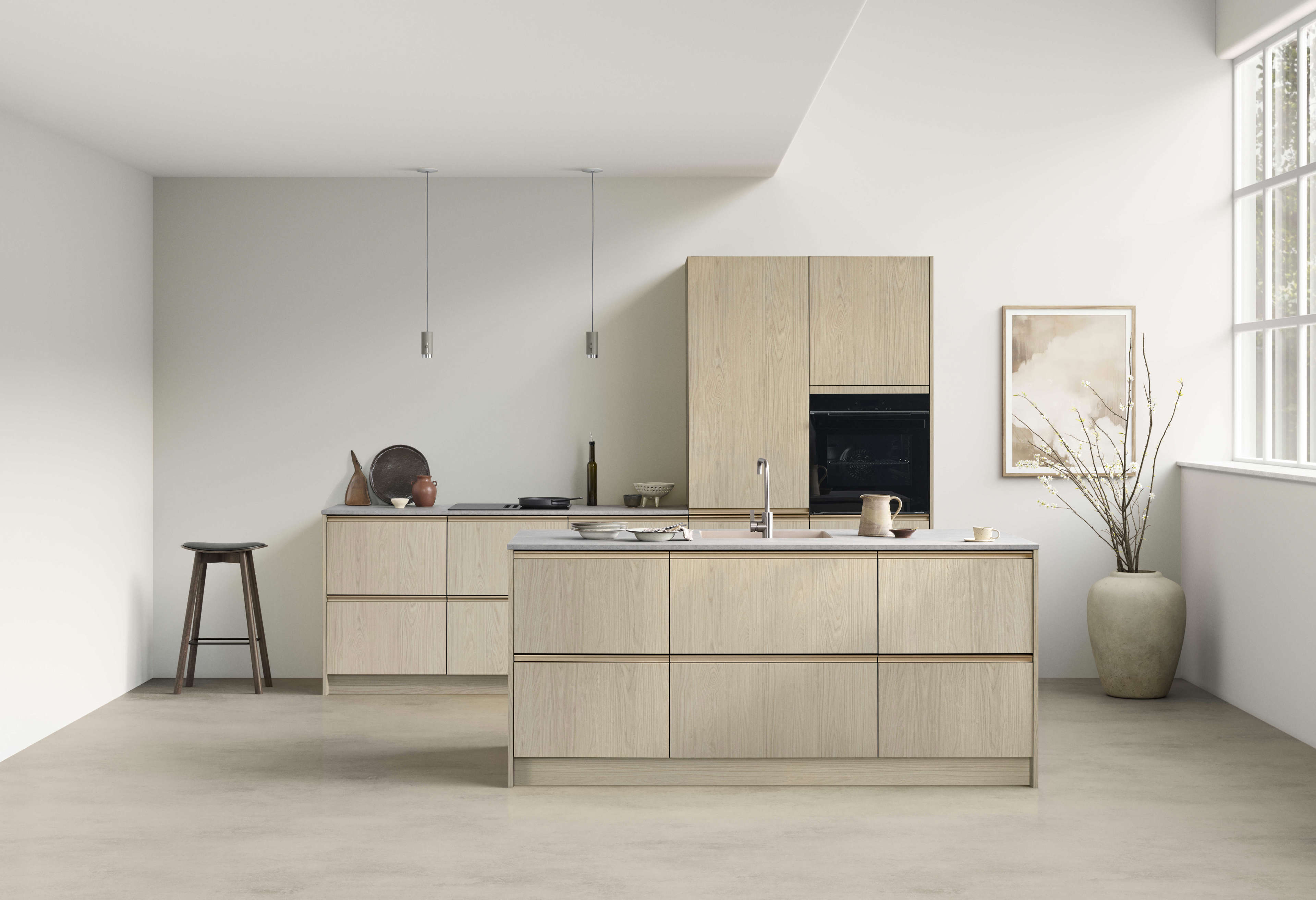
Helle: And I think that's what one of the really beautiful things about Compose is you can make exactly the look you want. You can go more classic saying, "I choose front colour of my kitchen. I choose the handle in the same colour," and then it's more classic. It's more neutral you can say. But you can also go crazy, completely crazy and say "Okay, I want a gray front and a blue handle," if that's what you want to do. So I think that's a, that's really a, a strong point. It's not just an ordinary handle. So it's not just a small handle, but it's a important part. And it creates part of the look of kitchen.
Julie: It does ... for sure. Absolutely. And it also lets you later, if you did go a little crazy and later you get tired of that you could just buy new handles and easily switch them out, right? Because they just attach on the back of the door.
Helle: Exactly. So you could switch it and have a different look- In a few years if you got tired of it, without replacing the whole kitchen. So I think that's also one of the things that we are looking very much into, how can we prolong the lifetime of the kitchen? Because a kitchen can last for many years. It doesn't ... After five years it's still like a new kitchen. It still works, yeah. Uh, so how can we tap into the market to say, "How can we prolong the lifetime of this kitchen?" And as you say, just by replacing the handle to a new colour, you can get a completely new look in your kitchen without changing all the fronts or the essential parts of the kitchen.
Julie: You can simply just change the handle. Yeah. That's super cool. I think that also taps into the longevity of things that people are looking for. Yes. Were there any challenges- In creating this, what did you run into? There's always a lot of challenges when you do new products.
Helle: Yes, I think, of course, the handle was the first thing we need to finalise, and you make different prototypes. Start with a 3D print, and then you make a prototype, and then you attach it to a sample kitchen, and you see how does it feel when it works. And then you need to redo it, rework it to make it exactly the thing. There hasn't been really big issues in the development process. I would say it's a normal development process that we have had with this one.
And we also managed to do it very fast, and that is something I think we need to do also in our business. We need to react quite quickly to market changes. And we succeeded in doing this quite quick actually.
Julie: Yeah, we actually moved up the release. It was supposed to be for September and now it's already June.
Just a few of the combinations that are possible
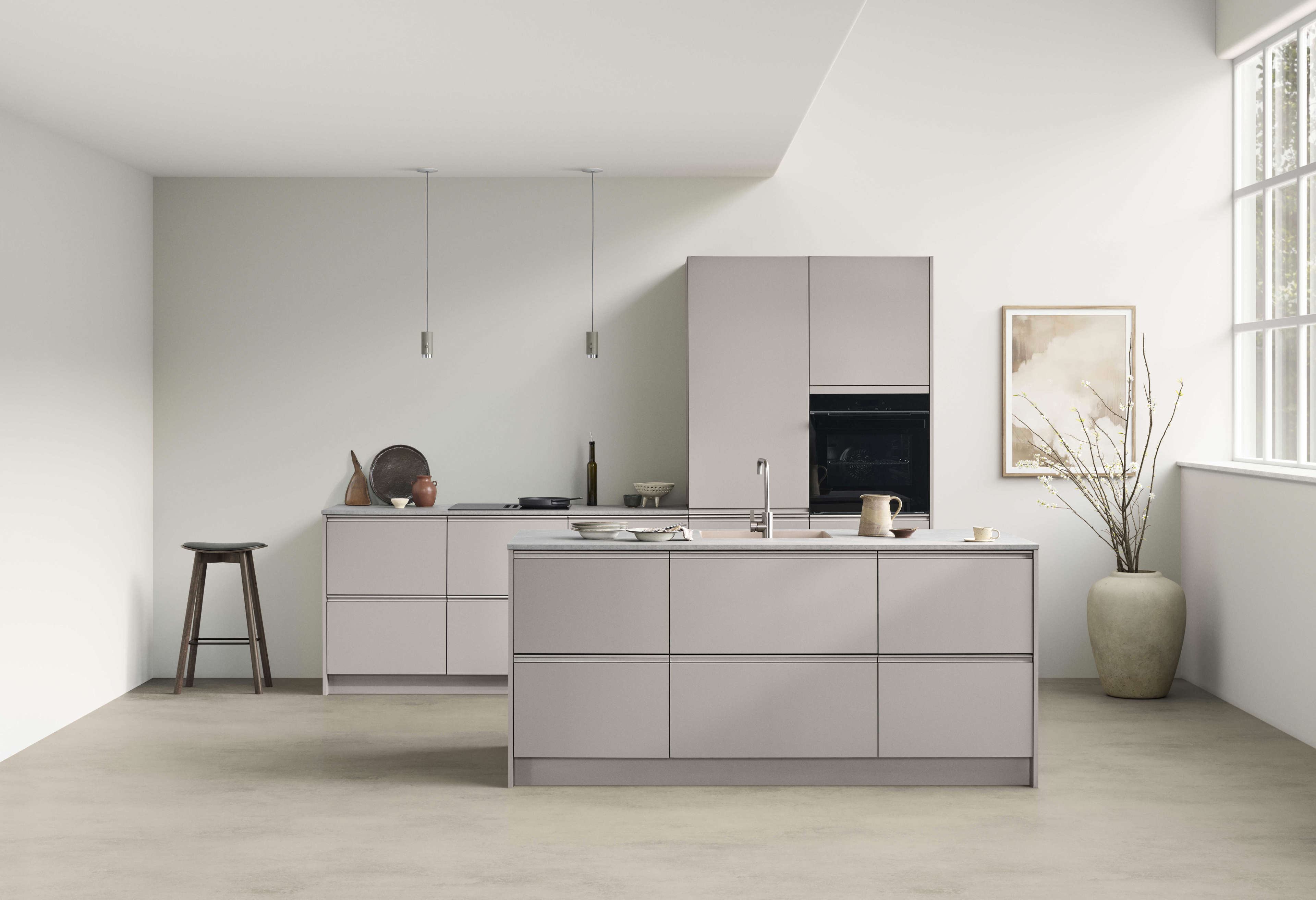
Arizona beige x arizona beige
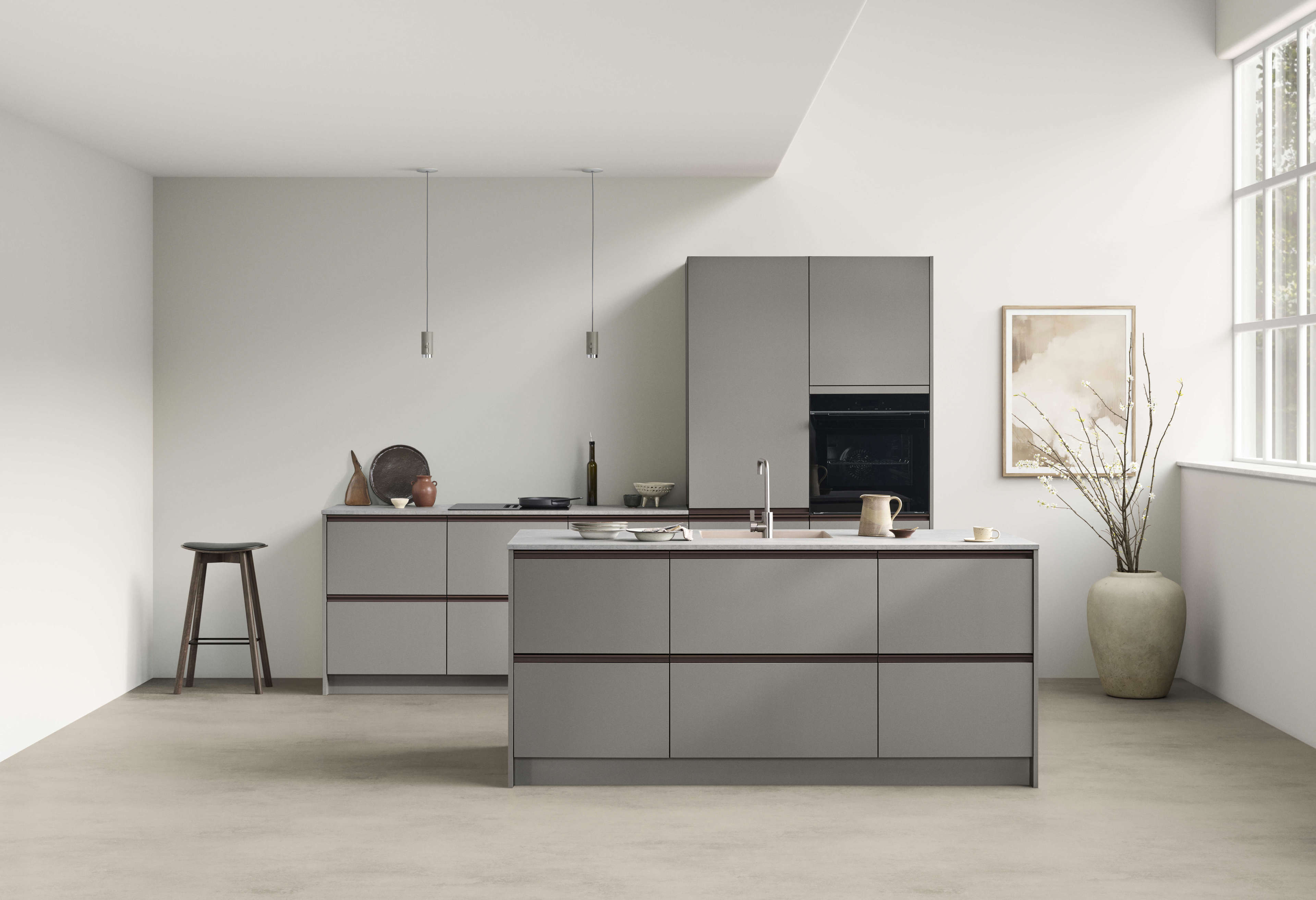
London grey x matte bronze
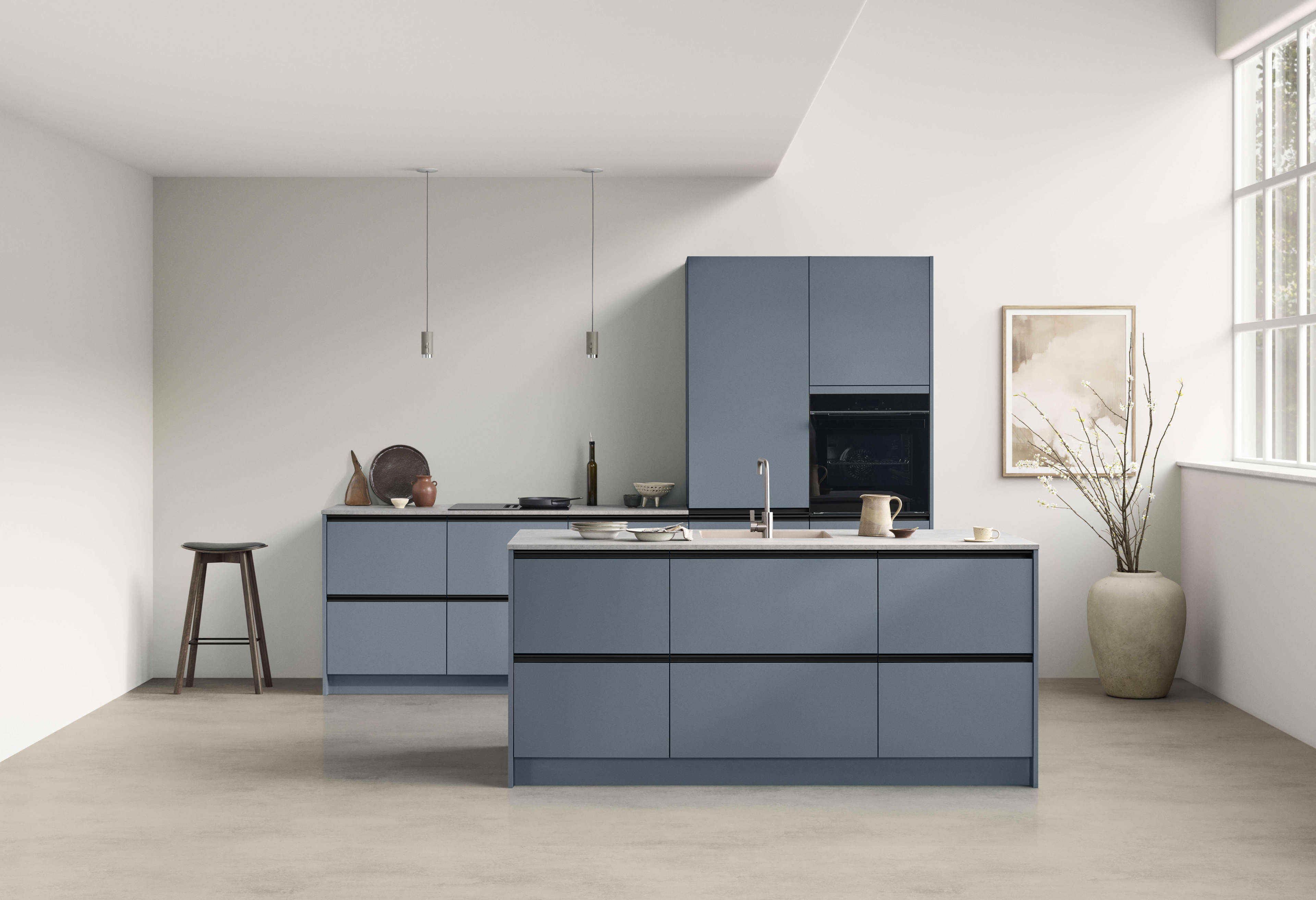
Blue x black
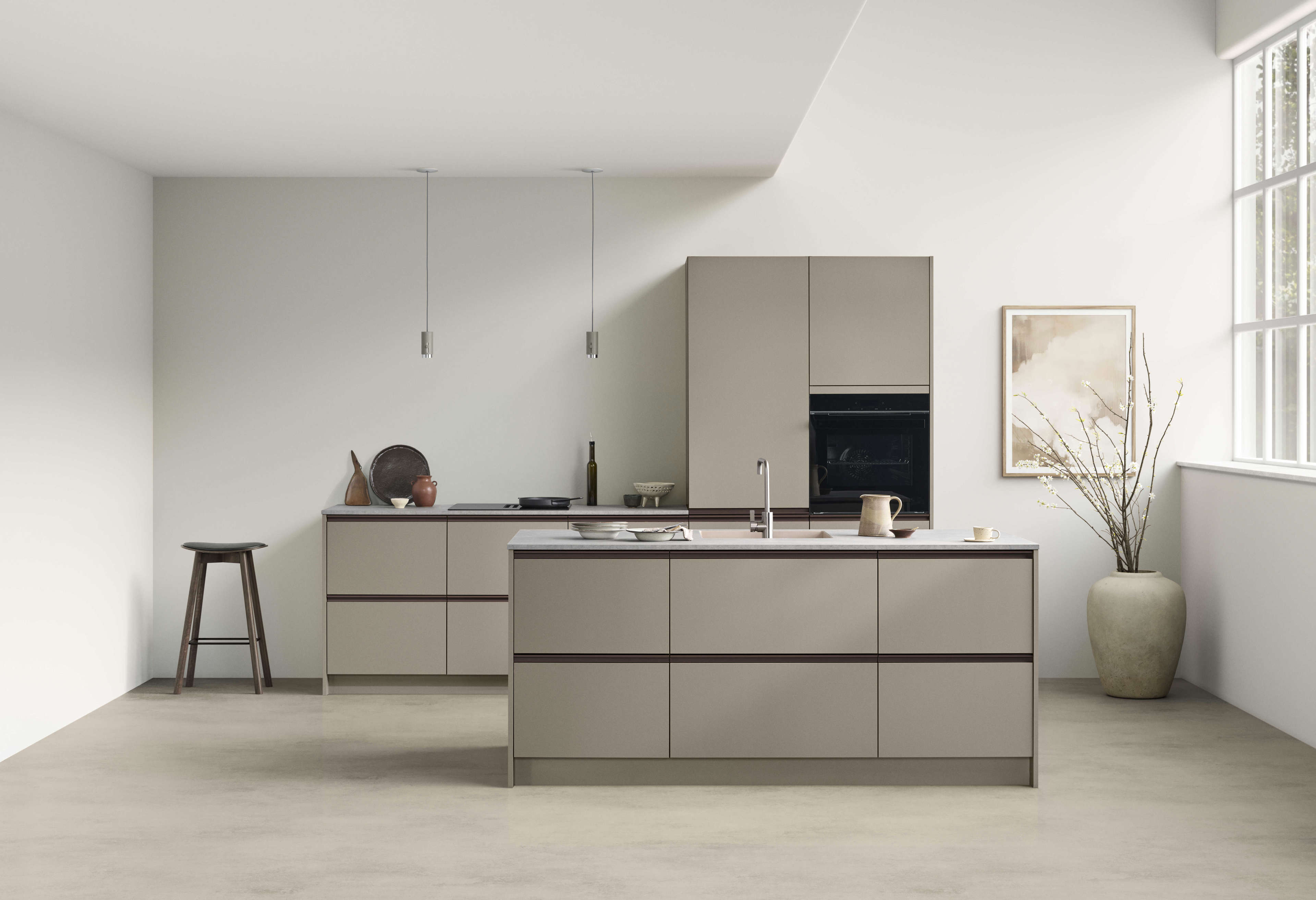
Clay x matte bronze
I've got a good feeling about the colours that we chose
Helle: But then the other thing I would say that we faced during the development process that caused a little bit of gray hair was the two wooden colours because I have received a lot of different samples of very many different types of wooden colours.
Julie: And to choose the exact right one nerve-wracking.
Helle: Did I do that right? So of course we talked to different people and saying, "Okay, what do you think? In which direction do you hear in your market?" I am very, I'm quite ... I got a good stomach feeling about the two colours we chose, so I can sleep, uh, during the night
Julie: Time will tell, right? I think they're also really pretty, especially the walnut. I think people are really gonna love the nordic glow.
Helle: Yeah. I think it taps very good into the market where we see the trend in the houses is it's your nest. It's something, it's a place where you feel safe. It's where you get together with your friends and your family, and it has to be a cozy atmosphere, and that's also something about the Danish design DNA. Yeah. We have a word called hygge, and hygge is very difficult to, uh, to describe in other languages.
Julie: They say cozy in English but it is not. It's not the same. It's so much more than cozy.
Helle: It's not the same. So I think that's, that's something we can create with adding these new wooden colours into our range. Really warm. Warm and nesting and hyggelig.
I'm not the same as my mom was at my age
Julie: But okay, when you choose these colours, you're imagining people being there. What kind of life have you imagined in the kitchen? What kind of people? Yeah. What kind of apartments? What kind of…
Helle: It was much easier earlier, I think, to put consumers in a box and saying, "Okay, this is this segment, and then they would buy this product." Yeah. That's not how we do today. Because I don't act the same way as my mom did in... when she had my age, and I think a lot of things is changing now. You can just... You can't say, "Okay, this is a kitchen for a family of two kids- For X kind of family ... and then blah, blah, blah." It's more I think you are seeking the feeling, you're seeking the style more than it's saying it's exactly for this customer.
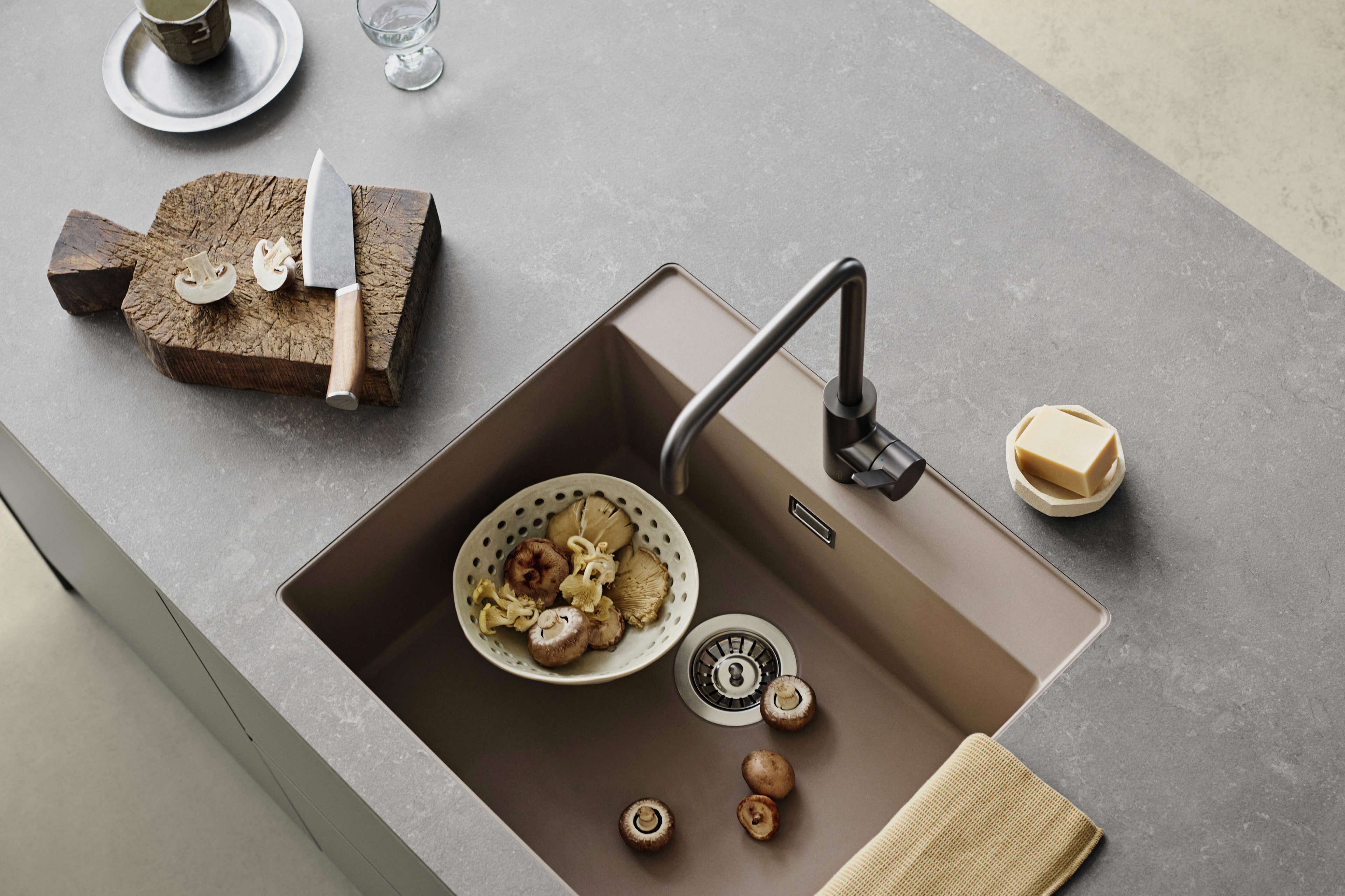
But of course, I can say a little bit about what it is because, I would say it's a family that seeks also a practical kitchen because this kitchen is very easy to clean. It's resistant to moist and to fingerprints and the daily life with kids and so on. So I would say it's probably more finding a consumer that looks into, “Does this fit into the lifestyle I have today?”
If they wanna do a lot of entertaining or what they're doing in their kitchen. I see this kitchen both in a small apartment in a big city, and I also see this kitchen in a family house in a small, in the suburbs somewhere.
Julie: Exactly. So I think also because you have 64 different options you can combine, it’s so versatile with the colour. Yeah. So it's easy to compose the kitchen that fits into the location.
Julie: I have a kind of crazy question about it. If it was music, what genre would it be? We call it compose, right? We call it compose. So you compose... a symphony, a harmony within your home.
Helle: Yeah. Your own harmony. I would not call it a classic music piece. No, if I was to describe it. I would probably call it a pop song. And because you can choose to listen to a pop song, a love song, a quiet one, and you can also choose a, a energetic summer pop song, depending on the choice you do.
Julie: Just depending on what combination of colours you have and your own mood. Yeah, I think so.
Are you curious about Compose? Head on over to our website to see it and compose your own perfect pop song of a kitchen using our visualiser. You can also find it at a Kvik store near you.
Thank you so much, Helle, for sitting down with me to talk about it. We'll have more with Helle in another episode later this year. We'll talk with her about our other new kitchen for autumn, Align, which we're presenting to the world at 3daysofdesign in Copenhagen, June 18 through the 20th. You can already hear a bit about it in an episode featuring Danish designer, Rikke Frost, who designed Align for us right here on The Sociable Kitchen® podcast.
Thank you for listening.